Vortex Laboratory
L-vortex@mail.ru
Firing of fine-grained materials in a vortex high-concentration flow
We have a SOLUTION!
We have developed a technology for the firing of fine-grained materials (such as molybdenum concentrate) in a vortex-based, highly concentrated flow, which eliminates the shortcomings of existing industrial technologies and improves the quality of the oxidation firing product. This is achieved by utilizing the potential of aerodynamic vortices, which enhance the material's contact with the oxidant and keep the processed material suspended during the firing process in the vortex device for the required duration.
The innovation lies in the organization of a swirling flow with controllably changing speed and time characteristics at a given temperature, which are optimal for the firing process.
Advantages:
· Rhenium recovery rate 94%
· Firing temperature 580-600 degrees Celsius
· the possibility of long-term retention of the suspension (up to 30 min. and more) in the working chambers of the device
· elimination of mechanisms for premature removal of solid matter from the reactor's working chambers
· negligible dust removal (less than 0.5%)
· work without melt on the walls
· intensive heat and mass transfer
Advantages:
The sulfur content in the technical molybdic oxide does not exceed 0.2%
The technical molybdic oxide can be used immediately for the production of ferro-molybdenum
The technology has been well developed and is reliable and easy to operate
Advantages:
High productivity (1200-1300 kg/m2 of the furnace floor)
The extraction rate of rhenium reaches 85%
Advantages:
Heat and mass transfer are higher than in multi-layer furnaces
Disadvantages:
High metal consumption
High energy consumption
Low specific productivity (70-80 kg/m2 of the furnace floor)
Dust removal of 10-15%
Low (less than 60%) recovery rate of rhenium
Slow heat and mass transfer
Disadvantages:
High percentage of residual unburned sulfur in the technical molybdic oxide - at least 2-2.5%
The technical molybdic oxide is unsuitable for smelting ferro-molybdenum
High dust emission ~40%
Disadvantages:
High metal consumption
High energy consumption
Low specific productivity
Technical molybdic oxide with a sulfur content of up to 1.5%
Low share (up to 50%) of possible extraction of rhenium
Quality of the technical molybdic oxide:
The conversion of MoS2 to MoO3 is 98.7%
Total sulfur content is less than 0.2%
Rhenium yield is over 94%
Average composition of the technical molybdic oxide:
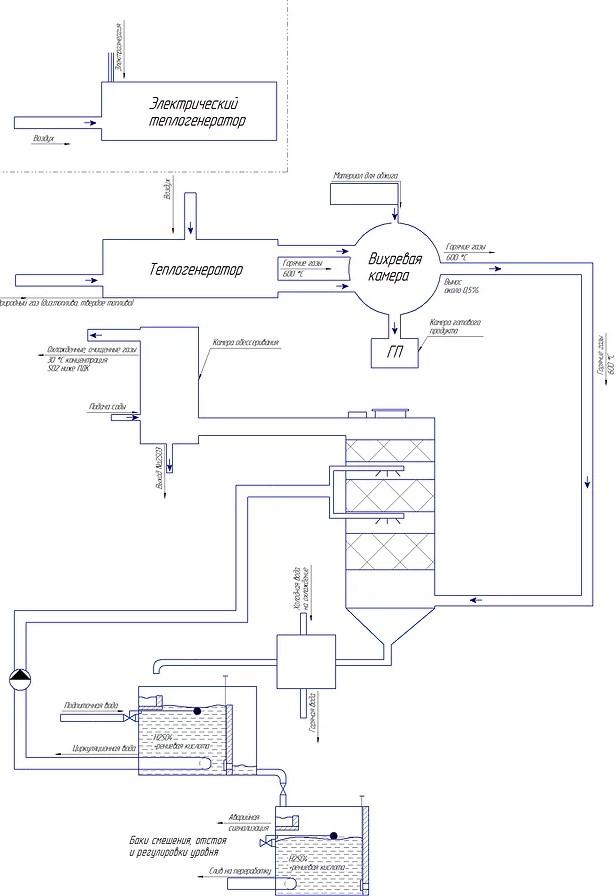
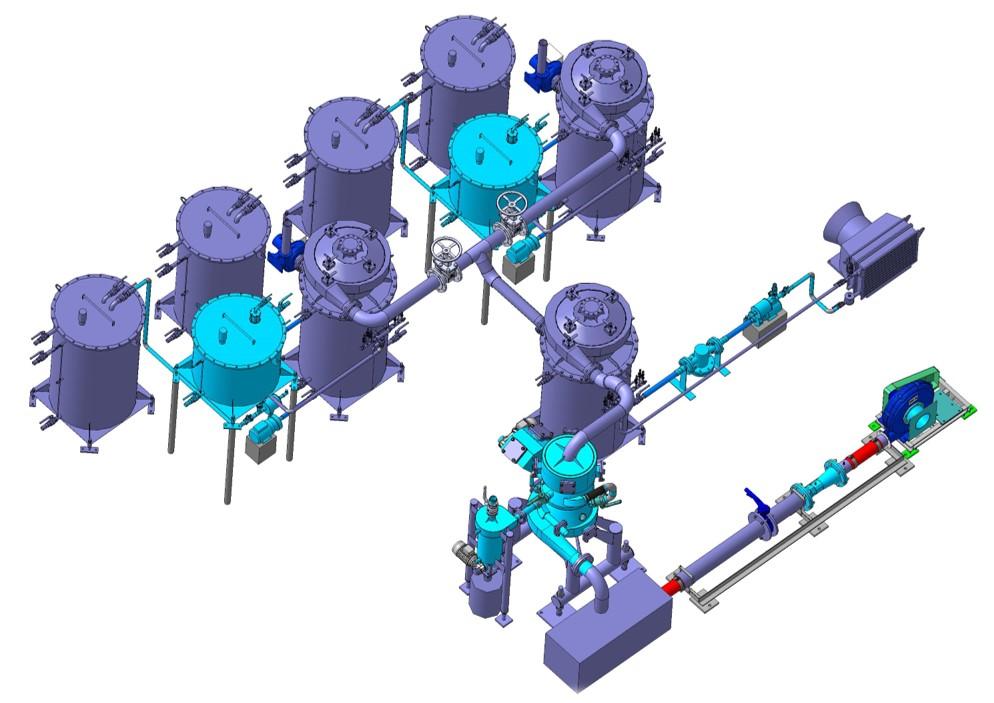
Scheme of roasting concentrates with purification of exhaust gases from sulfur
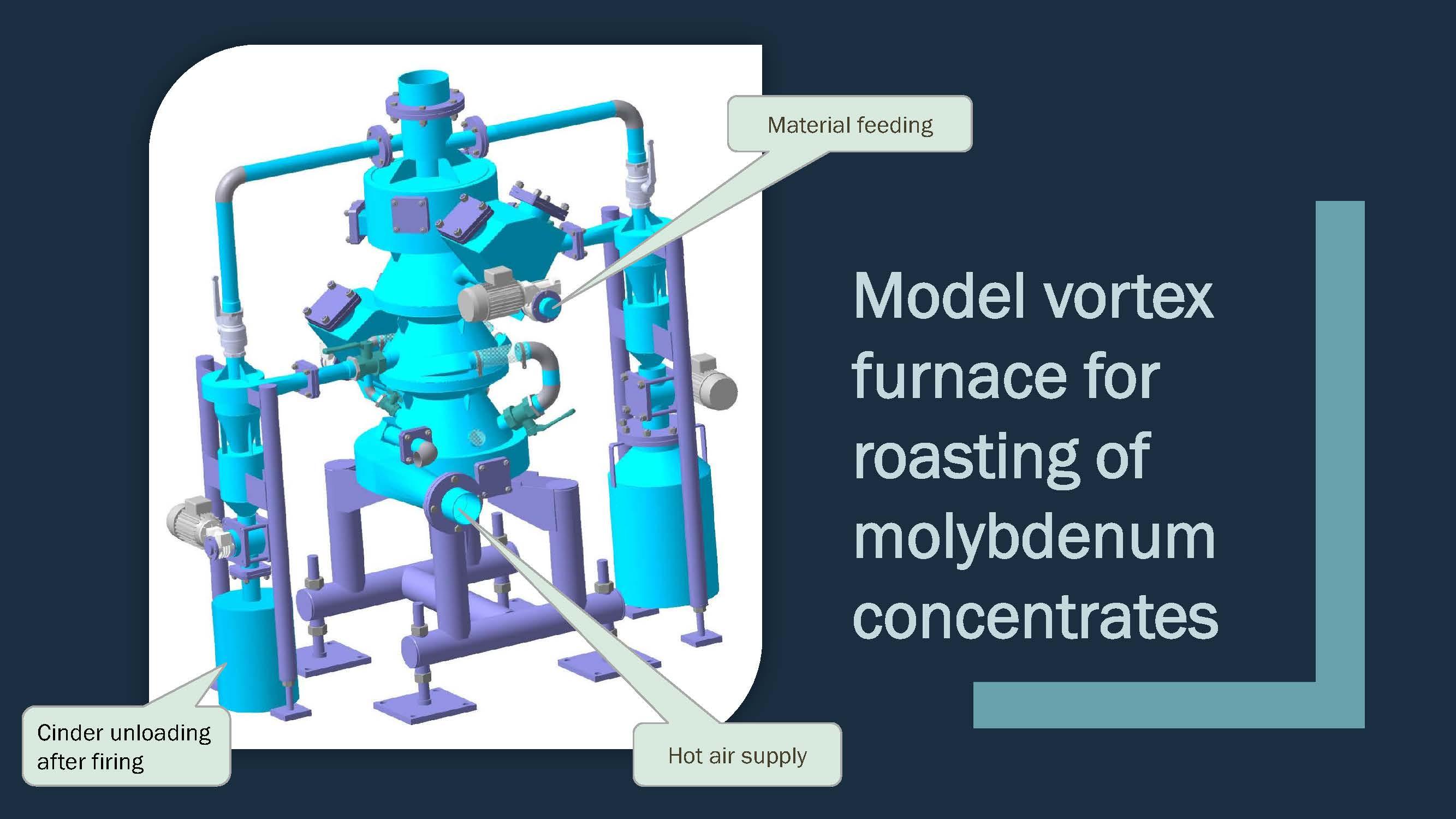
Technical parameters of the vortex furnace:
Productivity: 50kg/h for raw materials
Starting power consumption: 100kW.
For starting heating, electricity or the following fuels can be used: natural gas, diesel fuel, etc.
Working power consumption: 50kW
Dust removal: less than 0.5%
Overall dimensions: 1.5m x 1.5m. Height: 2m