Vortex Laboratory
L-vortex@mail.ru
Revolution in raw material processing: continuous high-speed pyrolysis with thermal shock!
Industrialists are well aware of the keys to profitability: processing speed, predictable yield of target products, and low operating costs. However, virtually all pyrolysis units on the market today are essentially replicas of technologies from the 1930s: slow, inert, with suboptimal fraction distribution.
We offer not an "improved classic," but a fundamentally new solution – we've transformed the theory of high-speed pyrolysis with thermal shock into a practical, working device!
Theory has become practice – and now this is your opportunity to reach a new level of efficiency!
We offer not an "improved classic," but a fundamentally new solution – we've transformed the theory of high-speed pyrolysis with thermal shock into a practical, working device!
Theory has become practice – and now this is your opportunity to reach a new level of efficiency!
What are the advantages of our high-speed oxidative pyrolysis technology for finely dispersed fuel using thermal shock in a vortex pyrolysis chamber?
✅ The ability, due to the aerodynamics of the vortex, to controllably hold particles of material without being carried away in the rotating layer for the time required to complete the thermomechanical processes
✅ The vortex flow creates the most favorable conditions for thermal shock — the uniform and instantaneous heating of fine fuel particles. The fuel heats up in hundredths or tenths of a second.
✅ Stable and predictable output of three commercial fractions: liquid fraction, synthesis gas and semi-coke.
✅ Our reactor organizes a continuous process of high-speed pyrolysis
✅Raw material versatility: wood waste, coal, peat, agricultural waste (sunflower husks, rice, oats, straw, etc.), RDF, and certain types of polymer mixtures. The unit ensures stable operation and high-quality product yields even with heterogeneous raw materials.
✅ The fuel maintains a free-flowing state not only in the chamber but also in the collector, which allows the heated material to be separated from the gas coolant without noticeably changing its physical and chemical properties.
Oxidative pyrolysis of high-molecular-weight thermal decomposition products produces chemical products similar in composition to those produced in coke-chemical production at relatively low final temperatures. The process implemented in our unit is autothermal: a small amount of oxygen supplied to the pyrolysis chamber exothermically breaks down the high-molecular-weight thermal decomposition products of the fuel into smaller fragments. The solid portion of the fuel, being less active, does not interact with oxygen under these conditions and is not oxidized. The resins, being the highly active portion, are oxidized, maintaining the reaction.
Furthermore, our complex utilizes heat recycling, using the sensible heat of the pyrolysis gas to heat the heat transfer gas.
This high-speed thermal processing method ensures high efficiency in the utilization of potential heat, creating favorable conditions for a controlled process that produces pyrolysis gas and semi-coke. High-quality refined solid smokeless fuel – semi-coke – is necessary for the development of ferrous and non-ferrous metallurgy, the chemical industry, and to meet the energy needs of municipal and household consumers.
✅ The ability, due to the aerodynamics of the vortex, to controllably hold particles of material without being carried away in the rotating layer for the time required to complete the thermomechanical processes
✅ The vortex flow creates the most favorable conditions for thermal shock — the uniform and instantaneous heating of fine fuel particles. The fuel heats up in hundredths or tenths of a second.
✅ Stable and predictable output of three commercial fractions: liquid fraction, synthesis gas and semi-coke.
✅ Our reactor organizes a continuous process of high-speed pyrolysis
✅Raw material versatility: wood waste, coal, peat, agricultural waste (sunflower husks, rice, oats, straw, etc.), RDF, and certain types of polymer mixtures. The unit ensures stable operation and high-quality product yields even with heterogeneous raw materials.
✅ The fuel maintains a free-flowing state not only in the chamber but also in the collector, which allows the heated material to be separated from the gas coolant without noticeably changing its physical and chemical properties.
Oxidative pyrolysis of high-molecular-weight thermal decomposition products produces chemical products similar in composition to those produced in coke-chemical production at relatively low final temperatures. The process implemented in our unit is autothermal: a small amount of oxygen supplied to the pyrolysis chamber exothermically breaks down the high-molecular-weight thermal decomposition products of the fuel into smaller fragments. The solid portion of the fuel, being less active, does not interact with oxygen under these conditions and is not oxidized. The resins, being the highly active portion, are oxidized, maintaining the reaction.
Furthermore, our complex utilizes heat recycling, using the sensible heat of the pyrolysis gas to heat the heat transfer gas.
This high-speed thermal processing method ensures high efficiency in the utilization of potential heat, creating favorable conditions for a controlled process that produces pyrolysis gas and semi-coke. High-quality refined solid smokeless fuel – semi-coke – is necessary for the development of ferrous and non-ferrous metallurgy, the chemical industry, and to meet the energy needs of municipal and household consumers.
Our installation isn't just another variation on old technologies.
It's a fundamentally new approach,
where every element of the design is dedicated to a single goal: making pyrolysis truly
fast, manageable, and profitable!
It's a fundamentally new approach,
where every element of the design is dedicated to a single goal: making pyrolysis truly
fast, manageable, and profitable!
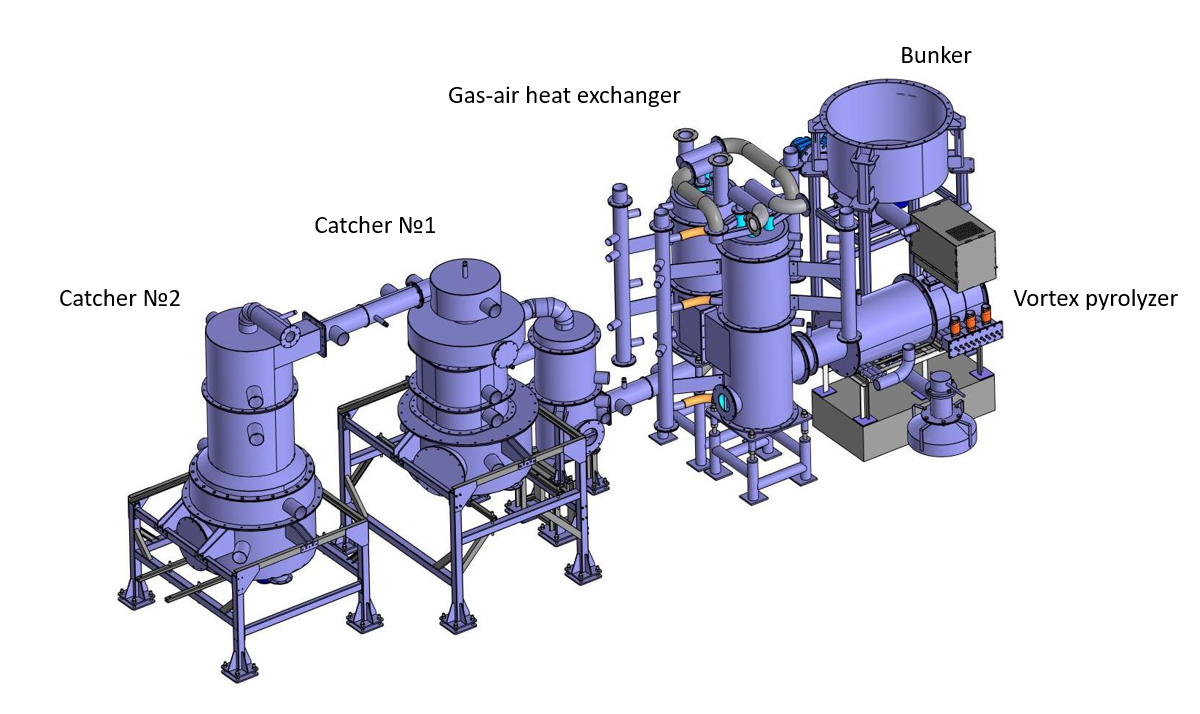
The conditions required for successful high-speed pyrolysis are:
1. High heat transfer rate
2. Thermal stability of the fuel bed
3. Rapid removal of pyrolysis vapors
4. High gas velocities without entrainment of fuel particles
5. High relative velocity between the gas and solid fuel particles
ALL of these conditions are met in the vortex devices we developed!
At the same time, they are a significant limitation for traditional fuel pyrolysis systems.
1. High heat transfer rate
2. Thermal stability of the fuel bed
3. Rapid removal of pyrolysis vapors
4. High gas velocities without entrainment of fuel particles
5. High relative velocity between the gas and solid fuel particles
ALL of these conditions are met in the vortex devices we developed!
At the same time, they are a significant limitation for traditional fuel pyrolysis systems.
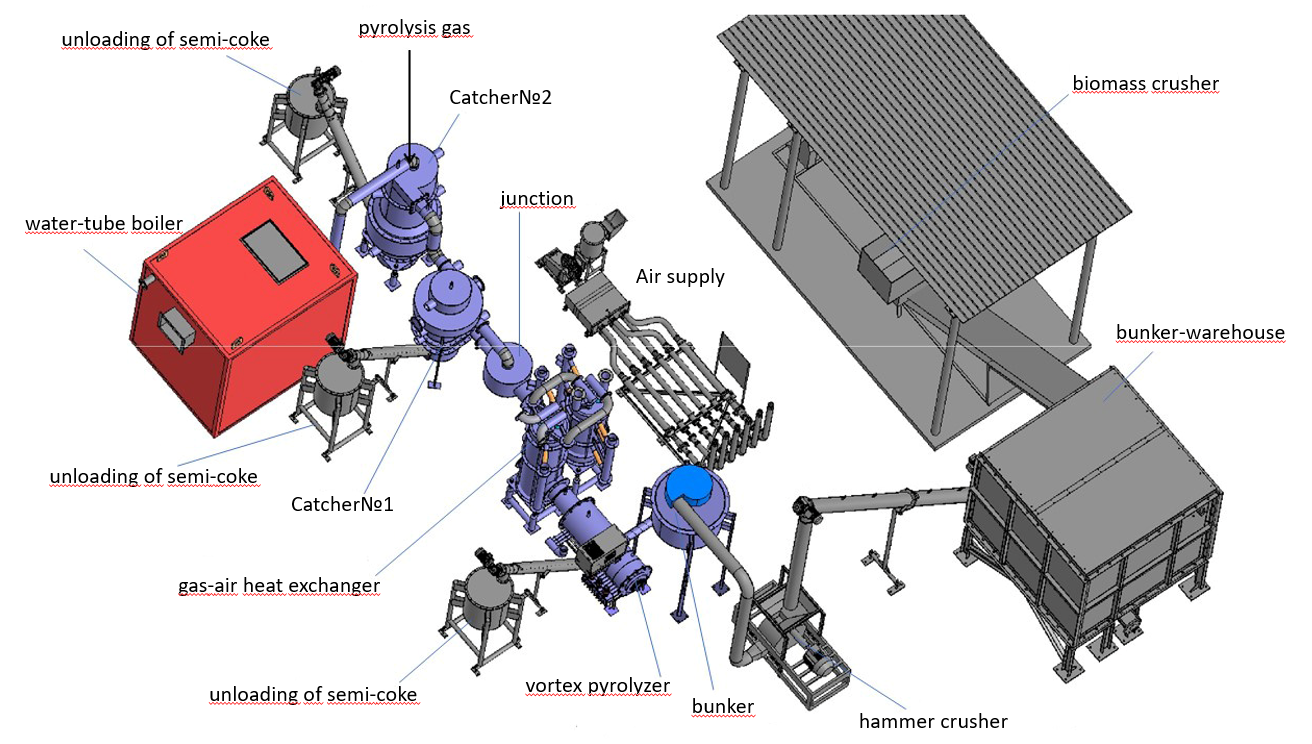
Three key output product fractions and their industrial applications
Syngas is a high-calorific gaseous fuel. It is suitable for use in boilers and gas piston units.
The liquid fraction (pyrolysis liquid) is a complex mixture of various compounds. Controlled thermal shock allows for the production of a lighter fraction. It can be used as a feedstock for further processing (for example, for the production of motor fuels or the extraction of by-products).
Semi-coke is a solid carbonaceous residue with a high energy density. It is used in metallurgy as a process feedstock and for the production of sorbents.
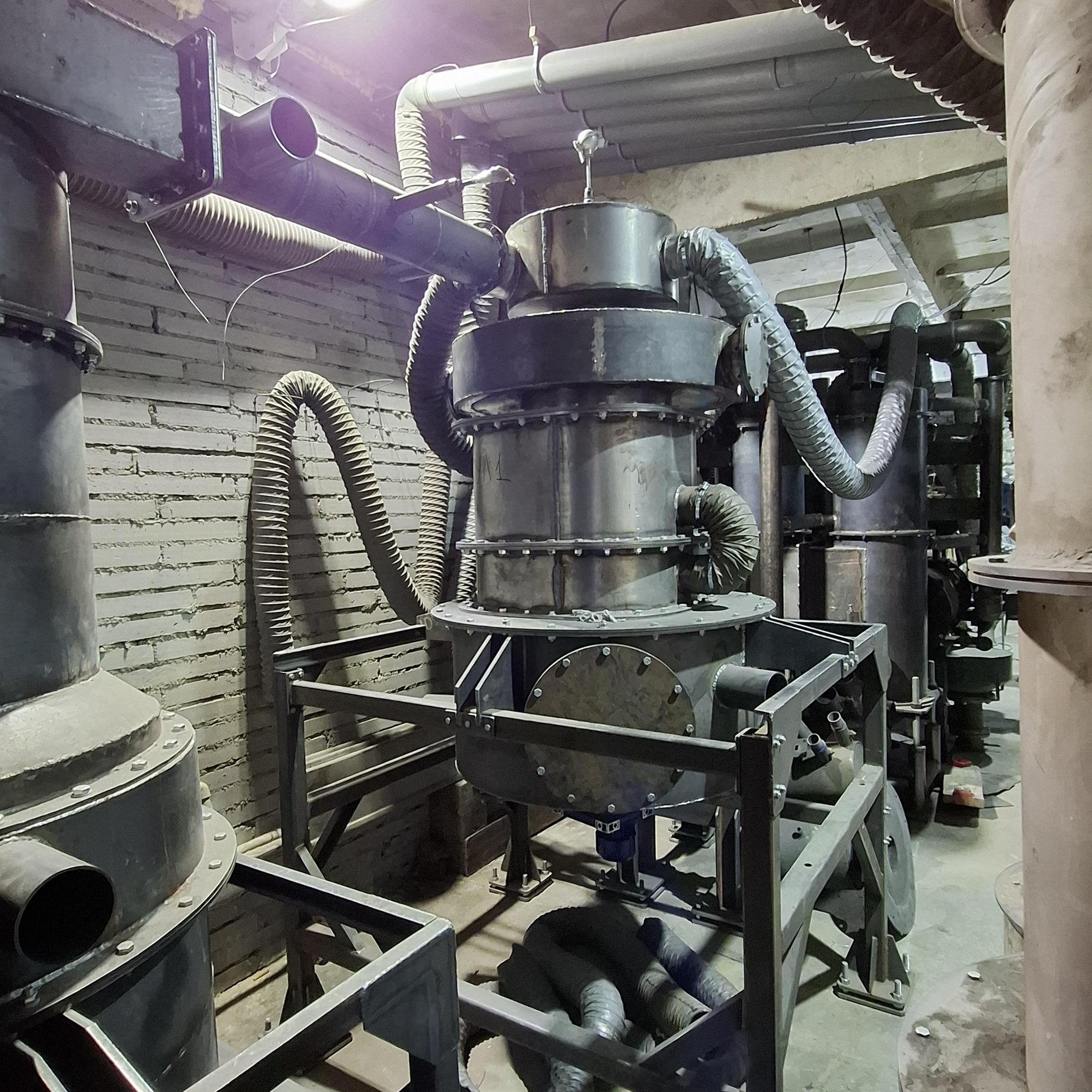
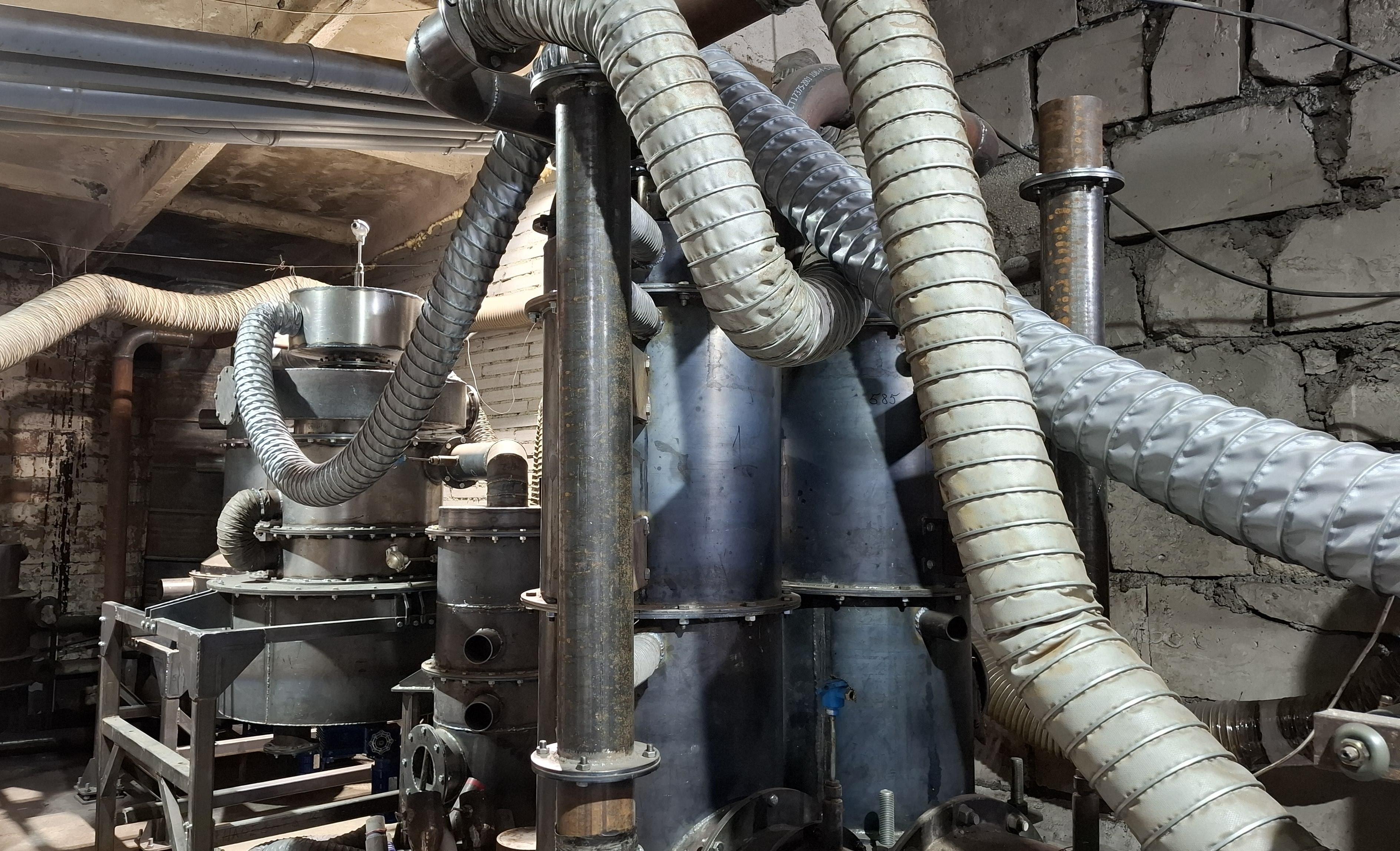
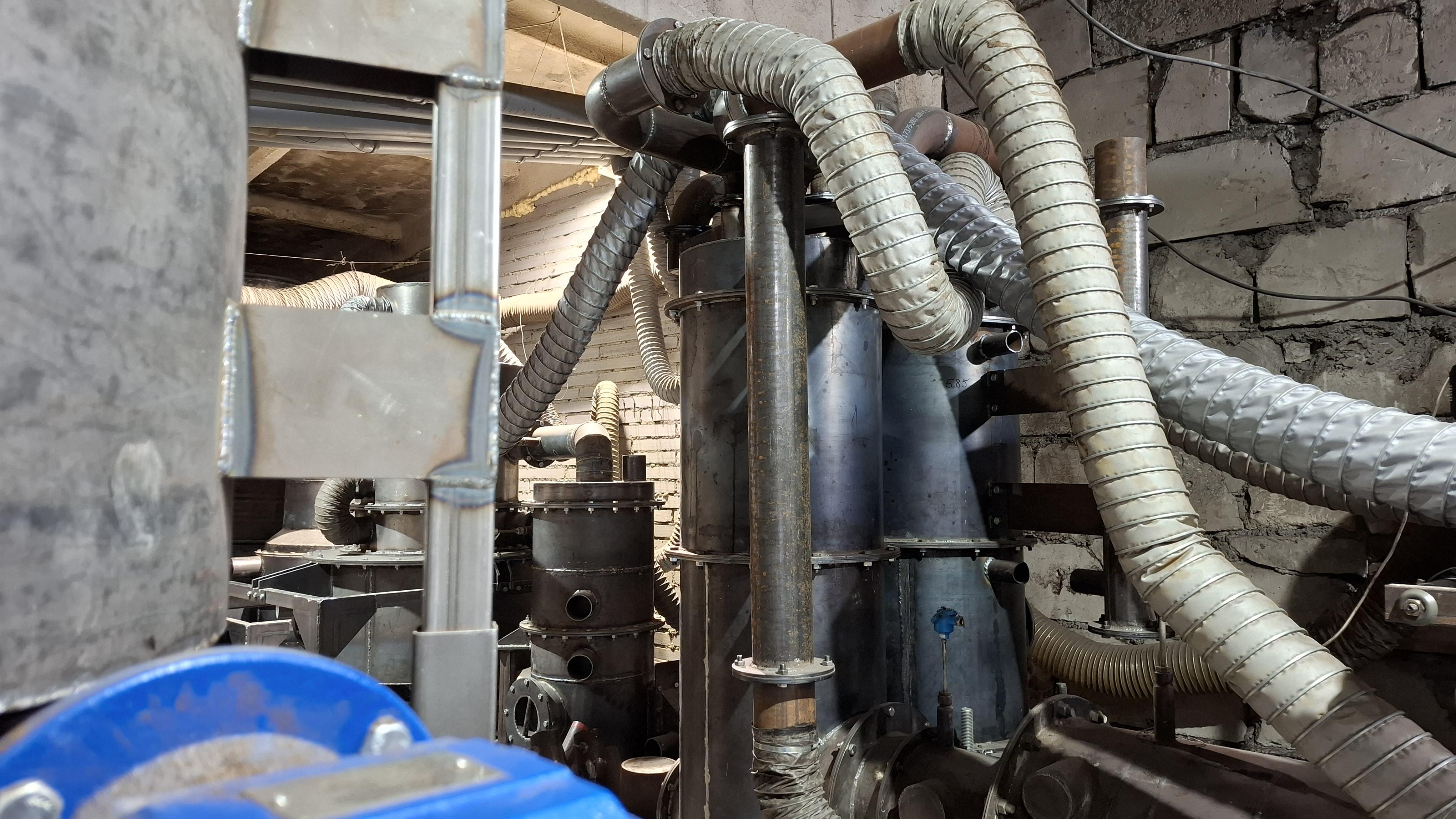
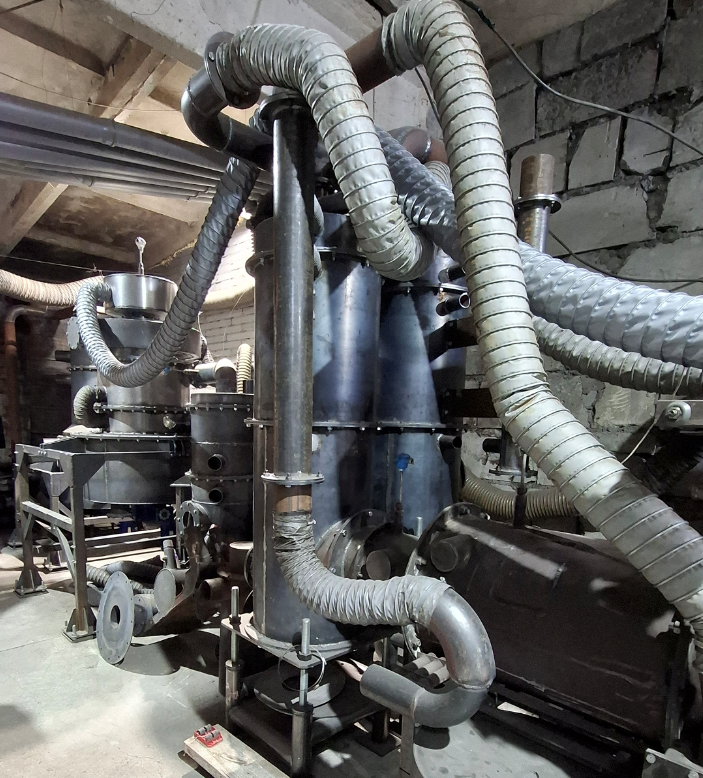
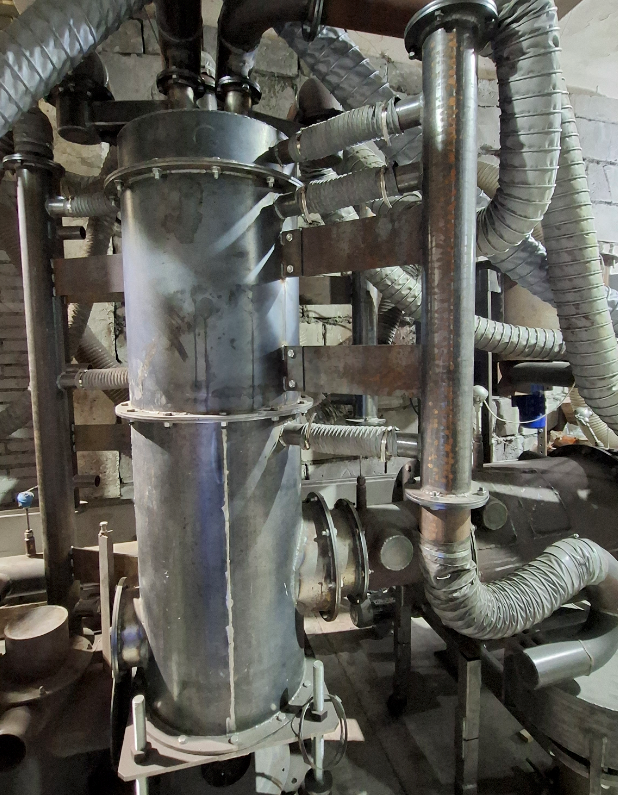
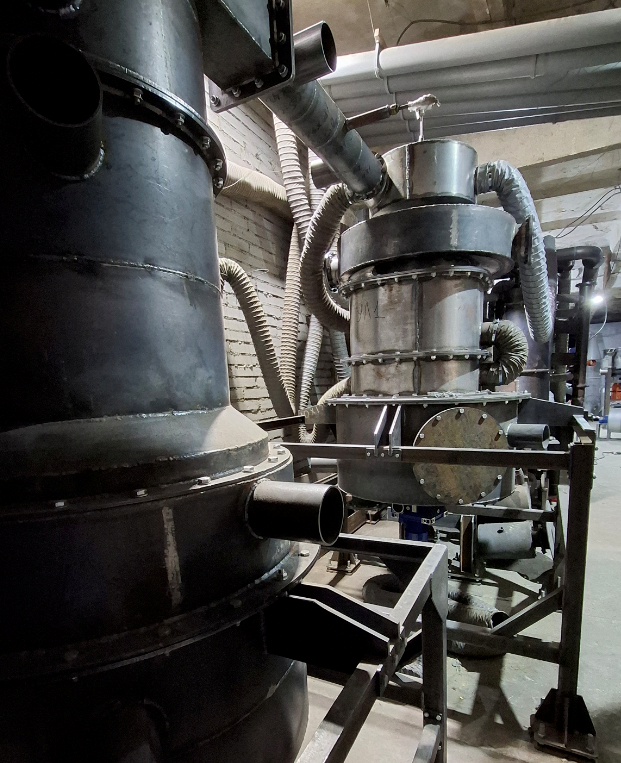
Below are photos from the assembly and preparation stage of the high-speed pyrolysis complex with thermal shock
Craftum
Конструктор сайтов Craftum