Vortex Laboratory
L-vortex@mail.ru
Burner vortex combustion devices
artificial and natural combustible gases
artificial and natural combustible gases
Environmentally friendly and complete combustion of fuels in swirl burner flames is determined by the structure of the flow into which the fuel is introduced for ignition and combustion. The modern staged combustion process depends on the swirling of air flows by burners, the design features of their air swirl registers, and the depth of their influence on the flame, as well as its interaction with the flames of other burners in the furnace. We propose a new method for controlling highly swirling flows: jet radial injection (JRI) of air into the flow through the perforated wall of the burner outlet channel at velocities comparable to the flow velocity when swirled by the register. Testing on burner models revealed an unusually broad range of influence on the structure and swirl of the generated flow (vortex, flame), exceeding the similar capabilities of all known swirl burner designs and a number of other devices.
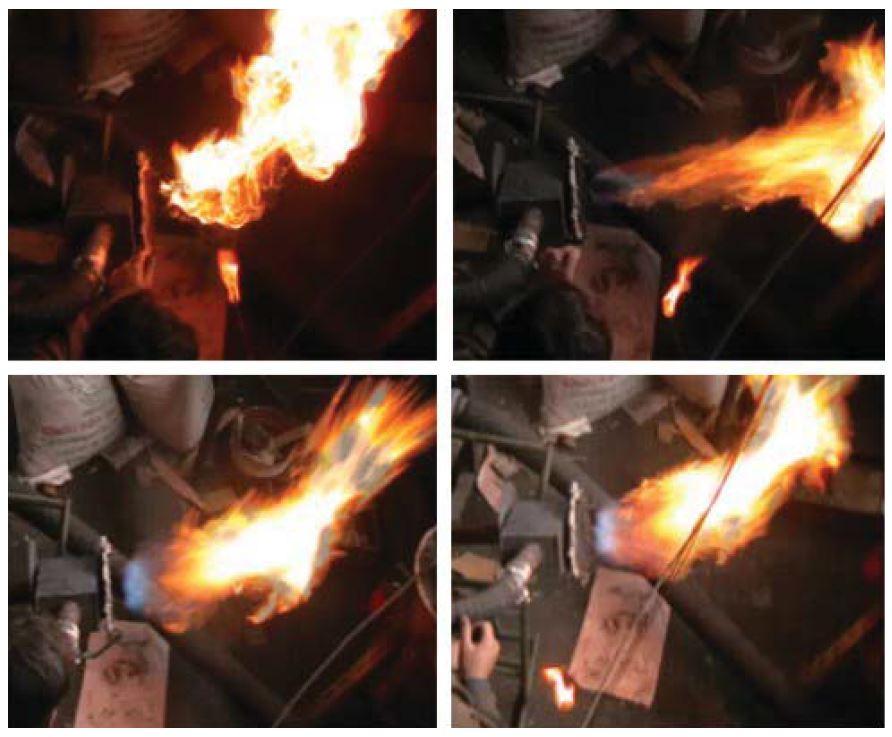
Torches of a simplified burner model with the JRI turned off (top left) and with weak JRI and its moderate increase (bottom right)
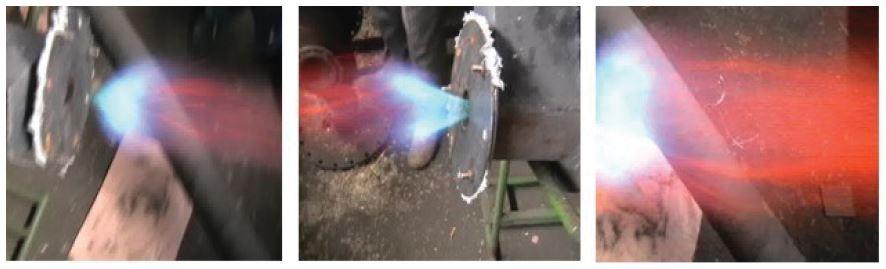
Stable flares with a conditional two-stage combustion of gas with a decrease in the flow swirl at the outlet of the model to the level of creating conditions for the torch breakage of conventional burners and even beyond these conditions for the breakage of their torches
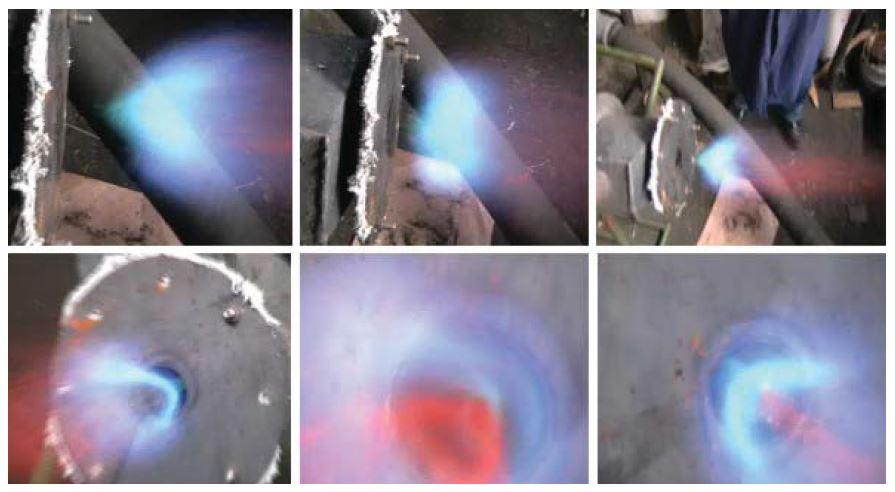
Torches with intense JRI, with complete flow isolation from the wall of the outlet channel of the burner model, with the potential to implement combustion schemes with deep suppression of nitrogen oxide formation
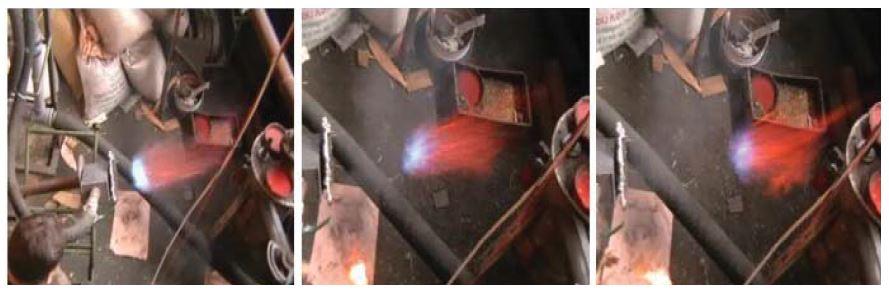
Steadily burning torches in the free space outside the burner
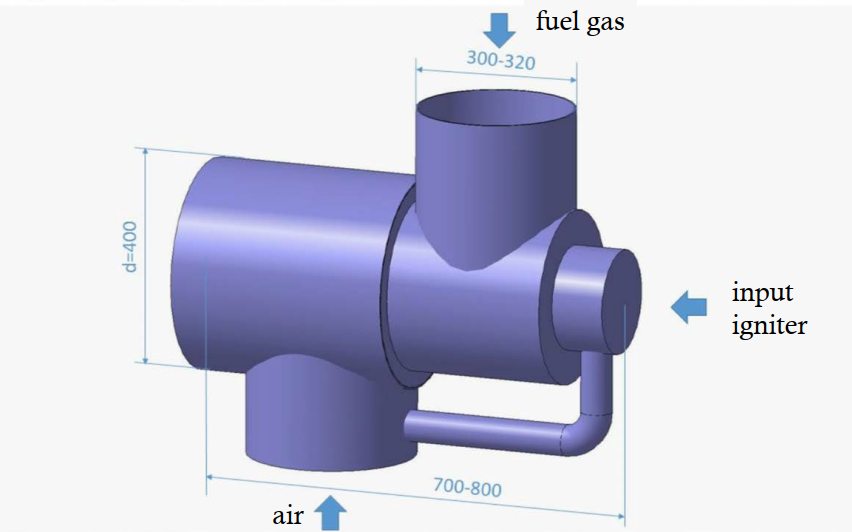
General view of the vortex burner
Craftum
Конструктор сайтов Craftum